Technique · 8 min read · June 19, 2026
The Exposure Triangle: Aperture, Shutter Speed & ISO Explained
The exposure triangle is the relationship between the three settings that control how bright your photo is: aperture (how wide the lens opens), shutter speed (how long the sensor is exposed to light), and ISO (how sensitive the sensor is). Change one and you balance it with another. Understand that trade-off and you can leave Auto behind for good.
In this guide
Aperture: light and depth
Aperture is the size of the opening in the lens, measured in f-stops like f/2.8 or f/16. Confusingly, a smaller number means a bigger opening: f/2.8 lets in a lot of light, f/16 lets in a little. Beyond brightness, aperture controls depth of field, meaning how much of the scene is in focus. A wide aperture (f/2.8) gives a shallow, blurred background; a narrow one (f/11-f/16) keeps everything sharp from foreground to horizon, which is why landscape photographers live around f/8-f/11.
Shutter speed: light and motion
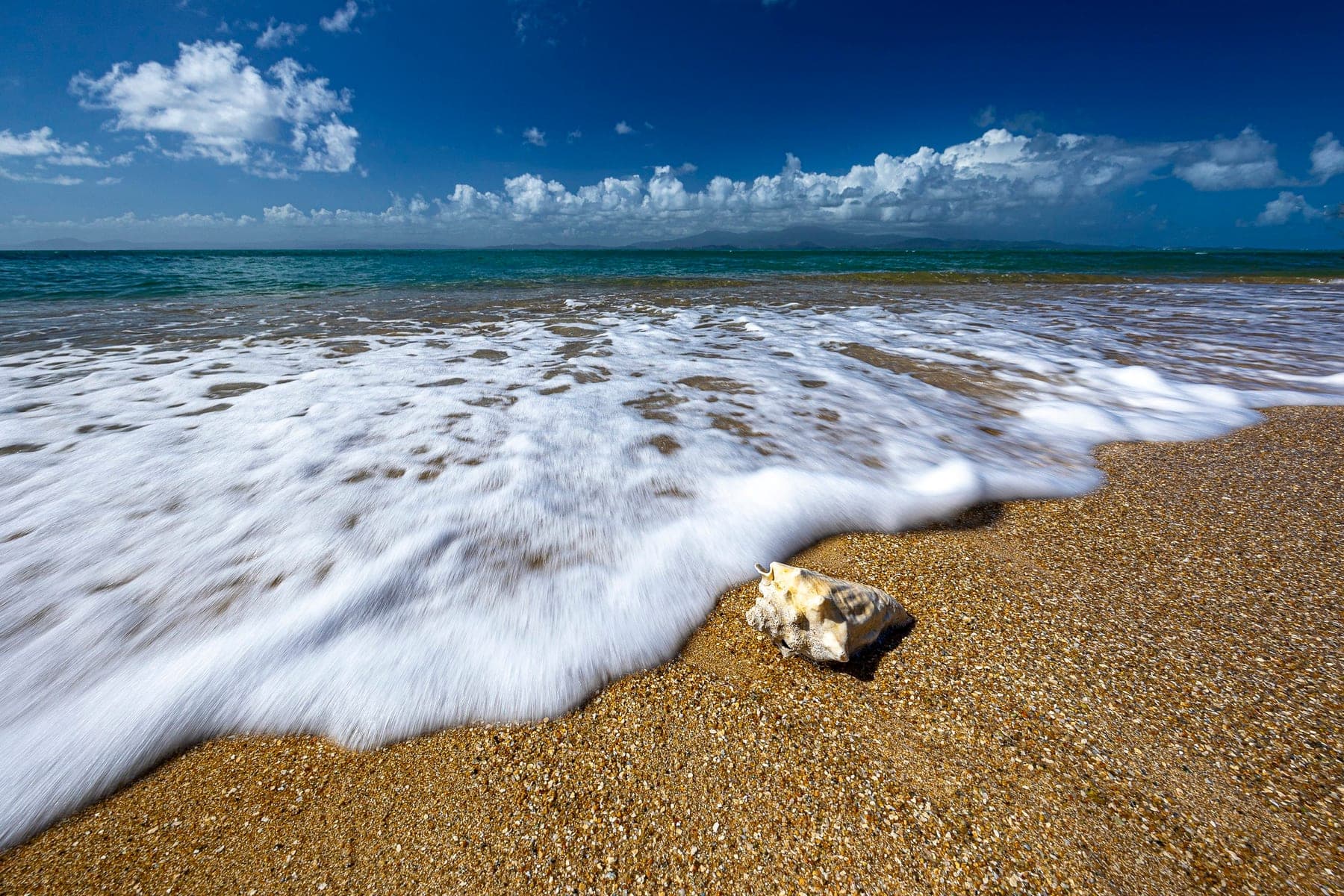
Shutter speed is how long the sensor is exposed, from 1/4000th of a second to many seconds. A fast shutter (1/1000s) freezes motion; a slow one (several seconds) blurs it, the difference between a crisp wave and silky water. It also affects sharpness from camera shake: handheld, keep your shutter faster than roughly 1 over your focal length. On a tripod, you can use any shutter you like.
ISO: light and noise
ISO is how sensitive the sensor is to light. Low ISO (100) gives the cleanest image but needs more light; high ISO (3200, 6400) lets you shoot in the dark but adds digital noise, that fine speckle. The rule is simple: use the lowest ISO the situation allows. In daylight on a tripod, that's ISO 100. At night, you accept a higher ISO because a slightly noisy sharp photo beats a clean blurry one.
How they balance: the 'stop'
The three settings are linked by the 'stop,' a doubling or halving of light. Open the aperture one stop and the photo gets brighter; to keep the same exposure, you halve the shutter time or drop the ISO one stop to compensate. That's the whole game: you're not just setting brightness, you're choosing how to achieve it. Want a blurred background? Open the aperture, then balance with a faster shutter. Want silky water? Slow the shutter, then balance with a smaller aperture or lower ISO.
A starting point for landscapes
Put the camera on a tripod, set ISO 100, choose f/8 to f/11 for front-to-back sharpness, and let the shutter speed fall wherever it needs to for a correct exposure, often anywhere from 1/60s to several seconds depending on the light. Check your histogram, adjust, and you've taken full control of the image. Everything else in photography builds on this one relationship.
Common questions
- What is the exposure triangle?
- The exposure triangle is the relationship between aperture, shutter speed, and ISO, the three settings that determine a photo's brightness. They're linked, so changing one requires balancing another to keep the exposure correct.
- Which setting should I change first?
- Decide what matters most for the shot. For landscapes, set aperture first (f/8-f/11 for sharpness); for action, set shutter speed first (fast to freeze motion); then adjust the others to balance the exposure, keeping ISO as low as possible.
- What is a 'stop' in photography?
- A stop is a doubling or halving of light. Increasing exposure by one stop doubles the light; decreasing by one stop halves it. Aperture, shutter speed, and ISO can each be adjusted in stops to balance one another.
Want to photograph these places with me?
I teach privately and lead small-group photography journeys to the locations in these guides.
Learning & journeys