Technique · 7 min read · June 26, 2026
Focus Stacking, Step by Step (and When You Actually Need It)
Focus stacking is how you make a photo that's sharp everywhere, foreground to background, when a single frame can't hold it all. You take several frames, each focused a little farther into the scene, then blend the sharp parts together in software. Here's exactly how I teach it, without the jargon.
When you actually need it
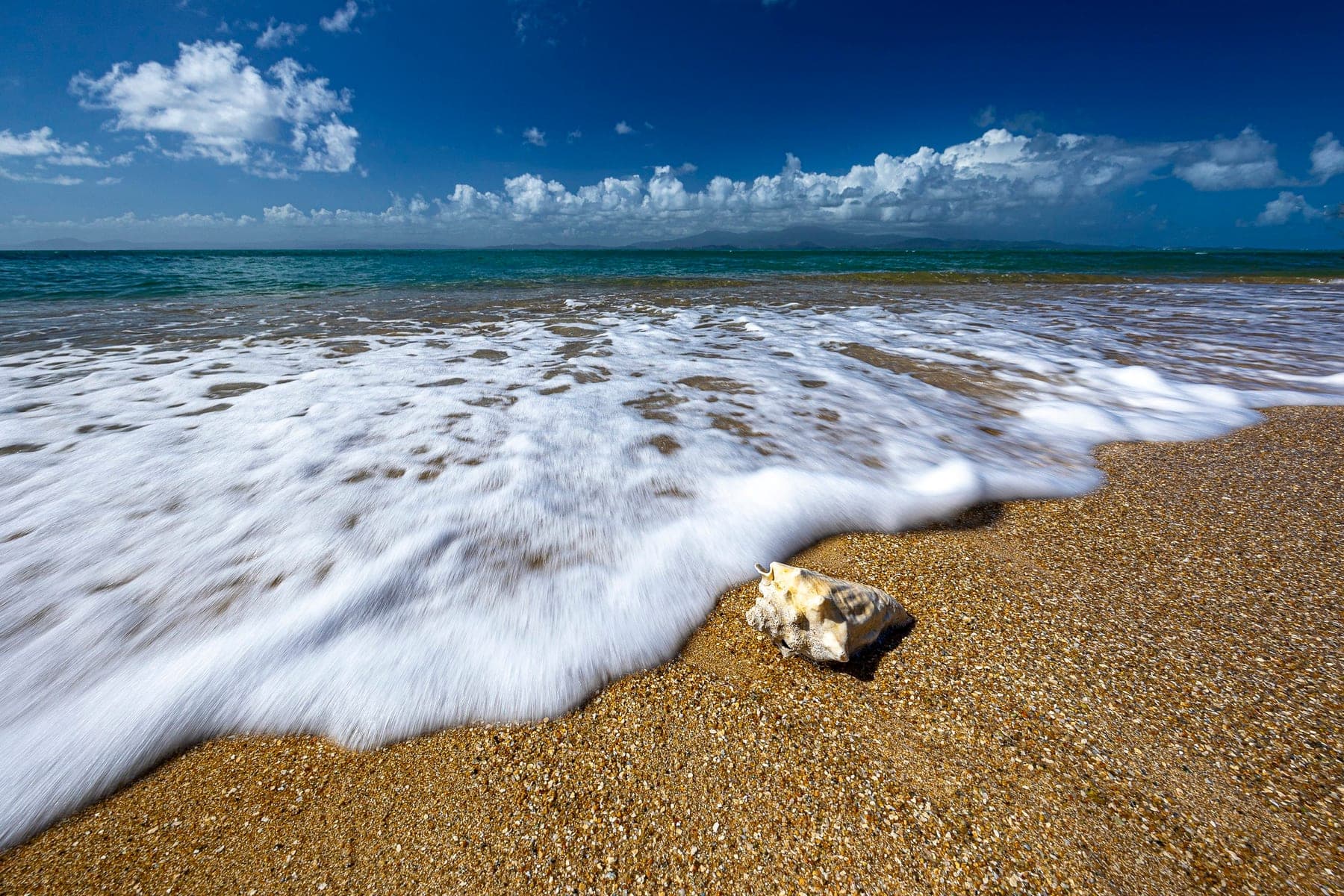
You need stacking when something important is very close to the lens and something else is far away: a flower at your feet and a mountain behind it, a product on a table, a rock in the surf with a headland beyond. At those distances no single aperture can hold both ends sharp.
When the whole scene is far away, a single frame at f/8 is plenty, so don't overcomplicate it. And resist the urge to just stop down to f/22; past about f/11 most lenses get softer from diffraction, which is the very problem stacking lets you avoid.
Shooting the frames
Put the camera on a tripod and switch to manual focus. Take your first frame focused on the nearest part of the scene, then nudge focus a little farther back and shoot again, and again, until the farthest point is sharp. Overlap each step so there are no gaps.
Keep the exposure identical for every frame (manual mode, fixed aperture and shutter) so the blend is seamless. If your camera has focus bracketing built in, let it take the series for you; that's the capture half of the job done automatically.
Blending them
In Lightroom, select the series and send it to Photoshop as layers, then use Edit → Auto-Align and Auto-Blend Layers (stack images). Photoshop keeps the sharp part of each frame and masks the rest. Dedicated tools like Helicon Focus do the same with more control.
Zoom in afterward and check the seams. The usual culprits are a little movement between frames or a missed focus step. We do this together in class on your own images, start to finish.
Common questions
- What's the difference between focus stacking and focus bracketing?
- Focus bracketing is the capture step, where the camera takes a series of frames stepping focus through the scene. Focus stacking is the blend afterward, where software combines the sharp part of each frame. You bracket, then stack.
- What aperture should I use for focus stacking?
- Use your lens's sharpest aperture, often around f/5.6 to f/8, rather than f/16 or f/22. Stacking supplies the front-to-back depth, so you avoid the softening that very small apertures cause.
Want to photograph these places with me?
I teach privately and lead small-group photography journeys to the locations in these guides.
Learning & journeys