Technique · 7 min read · June 17, 2026
Composition for Landscape Photography: Principles That Work
Strong landscape composition comes down to a few reliable tools: a clear subject, a foreground that leads the eye in, the rule of thirds, leading lines, a sense of scale, and simplicity. They aren't rigid rules; they're ways to guide the viewer's eye through the frame. Here's how to use them.
In this guide
Start with a subject
Before anything else, ask what the photograph is about. 'A nice view' is not a subject, but this lone tree, that mountain, or this curve of light is. A clear subject gives the eye somewhere to land and gives you something to build the rest of the frame around. Everything else should support it, not compete with it.
Build depth with a foreground
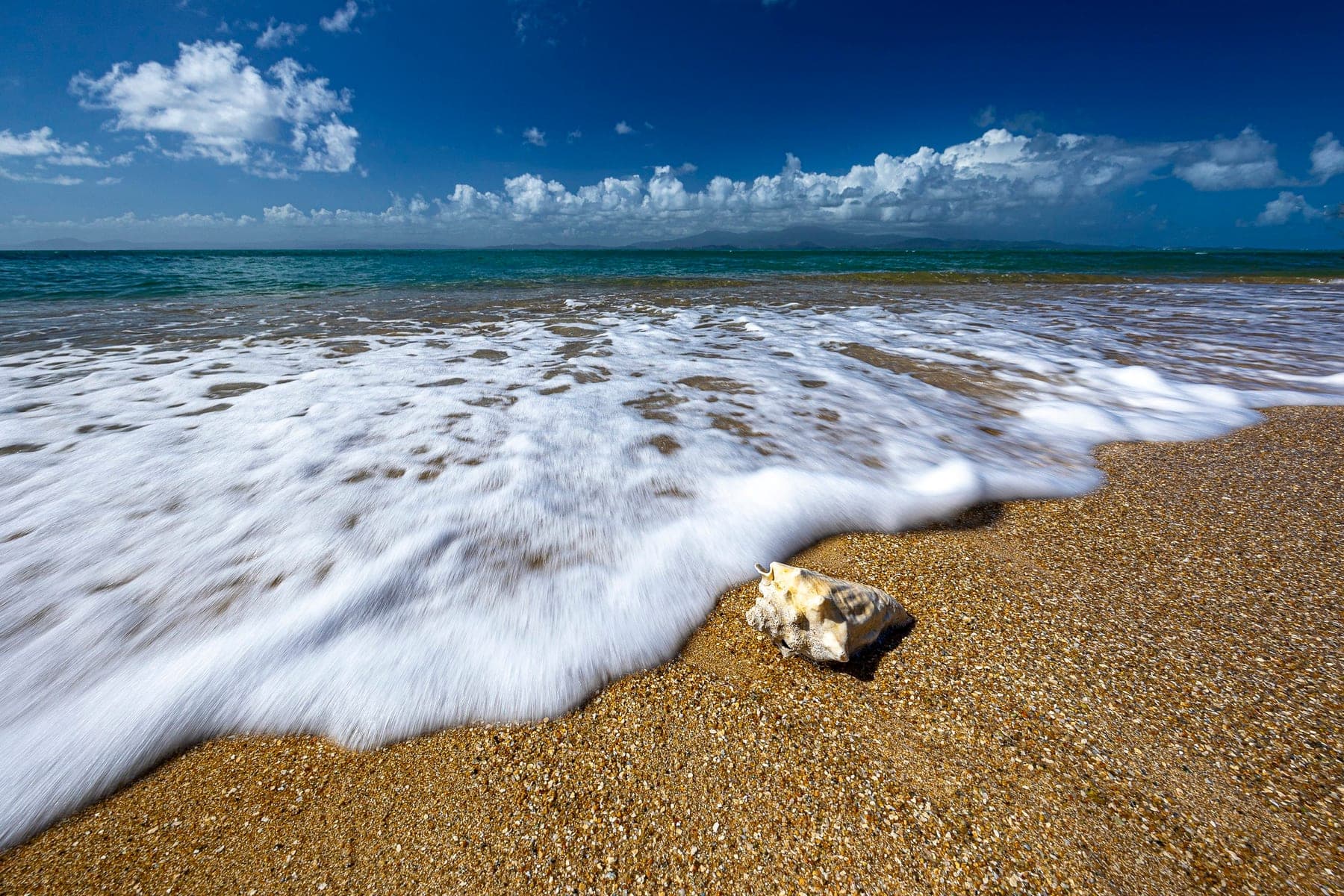
The flattest mistake in landscape photography is a frame that's all middle-distance. Find something to anchor the foreground (a rock, flowers, a patch of texture) close to the lens, and let it lead the eye back into the scene. Foreground, middle ground, and background together turn a flat view into a three-dimensional space the viewer can step into.
The rule of thirds (and when to break it)
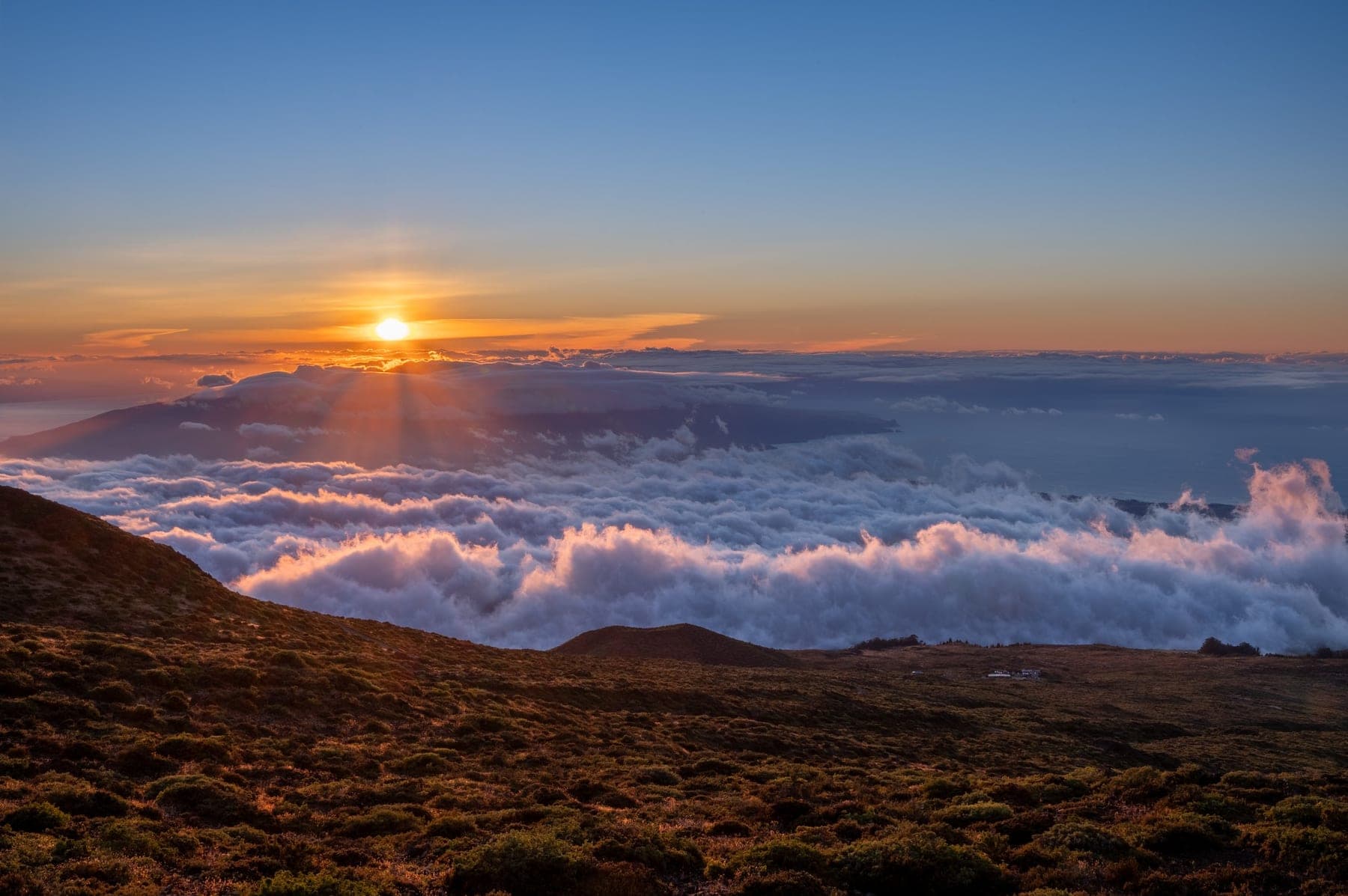
Imagine your frame divided into thirds by two horizontal and two vertical lines. Placing your subject or horizon along those lines, rather than dead center, usually creates a more balanced, dynamic image. Put the horizon on the lower third to emphasize a dramatic sky, or the upper third to feature a strong foreground. It's a default, not a law: a centered composition can be powerful when the scene is symmetrical.
Leading lines and natural frames
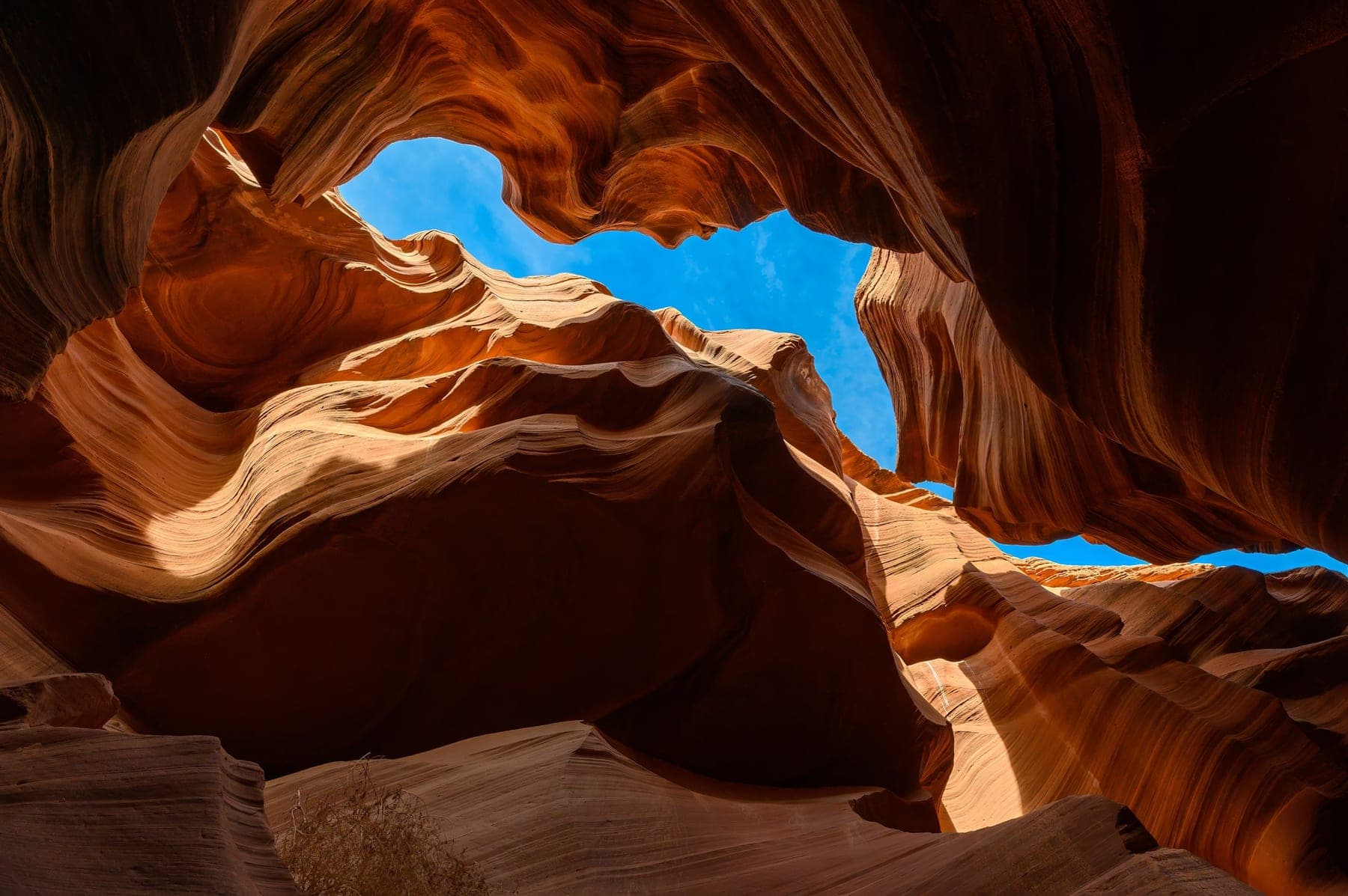
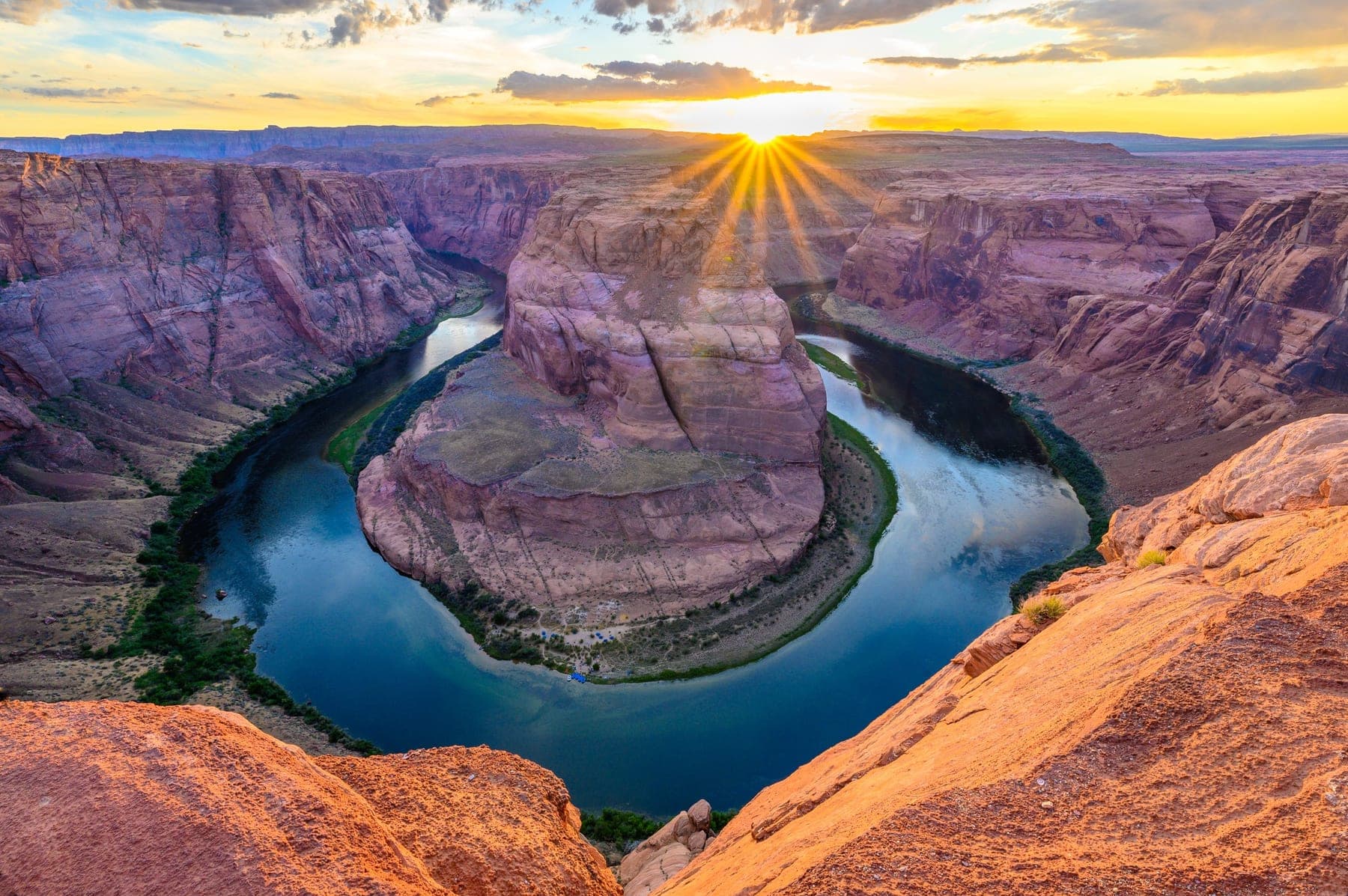
Lines pull the eye through a photograph. A river, a road, a fence, a shoreline, a ridge: use them to lead from the foreground toward your subject. Look, too, for natural frames: an arch of branches, a canyon opening, a gap in the rocks that surrounds and emphasizes the scene beyond. Both are ways of directing attention exactly where you want it.
Simplify, and give it scale
Most weak compositions try to include too much. Decide what matters and exclude the rest; empty space (a clean sky, still water) gives the subject room to breathe. And when a landscape is vast, include something of known size, such as a person, a tree, or a building, to reveal the scale. A tiny figure beneath a huge cliff says 'enormous' far better than the cliff alone.
Common questions
- What is the rule of thirds?
- The rule of thirds divides the frame into a 3×3 grid and suggests placing key elements, such as your subject or the horizon, along those lines or at their intersections, rather than in the center, for a more balanced, dynamic image.
- How do I make my landscape photos more interesting?
- Choose a clear subject, add a strong foreground for depth, use leading lines to guide the eye, simplify the frame by excluding clutter, and include something for scale. Combine those with good light and the image comes alive.
Want to photograph these places with me?
I teach privately and lead small-group photography journeys to the locations in these guides.
Learning & journeys